

Key Takeaways
- Stop selling a narrow utility. Easy-to-copy features are not a moat. Sell a job customers cannot get done elsewhere.
- Expand into new verticals. New products should make your existing expertise easier to buy, or compliment what you’re already doing.
- Distribution beats polish. wordpress.org and SEO will not carry you anymore. Plan how every product, post, and video gets found.
- Success by a thousand cuts. Growth usually comes from improving many channels a little, not from one clever feature or one lucky post.
2026 has been wild for digital product companies across the board. You’ve heard that plugins are dead almost as often as you’ve heard that SaaS is dead. And yet, there are opposing signals everywhere. The demand for high-quality, useful, and intuitive products is still enormous.
Last year, most of my recommendations for 2026 centered on improving product experiences. As code gets easier to produce and easier to copy, the experience surrounding that code becomes much harder to commoditize. The companies that make their products easy to understand, valuable quickly, and genuinely useful are in a much better position to survive.
That hasn’t changed. Sales and distribution have become much harder, though, which means I’m overdue for this post.
The biggest difference between last year’s recommendations and this year’s is where I’m standing now. When I published that article, I was writing my resignation to Liquid Web at the same time. My perspective came largely from how we built products at StellarWP and everything I learned helping build GiveWP.
Since then, I’ve spent about nine months coaching founders and working directly with product companies. I have to say it’s been an absolute privilege. Looking back this is a quick
I’ve been able to do hands-on analysis across a meaningful sample of the WordPress product industry, from early product-market fit questions to onboarding, pricing, positioning, retention, and distribution.
If you’d like me to bring that same kind of work to your product business, you can always book a free discovery call.
With that in mind, these are my recommendations for product shops based on the real conversations and work I’ve done over the past year. They’re the things I believe product owners should seriously consider for 2027 and beyond.
1. Become indispensable
Utility products are increasingly easy to reproduce or replace. The way to battle that is to expand your focus beyond serving a narrow purpose and instead make your product indispensable.
Michael Barinov came to me early this year with his two WooCommerce extensions in a state of flat to declining. We focused on creating a unified brand that would enable him to expand his offering. That’s how KramaKit was born.
I’m working with Michael again. We’re shifting the focus of KramaKit from the narrow idea of enhancing WooCommerce search and labels to “Helping your customers make their purchase decision faster.” With a focus like that, the products mature in new ways, any additional products Michael wants to build have a stronger customer value proposition, and he positions his products as driving more informed (and ideally just more) purchases.
Once we focused KramaKit on helping stores make purchase decisions faster, it became much clearer how our products fit together and what we should build next.

Michael Barinov
Founder, KramaKit
2. Verticalize your offerings
NerdPress built its business around WordPress support and maintenance. As MCPs for WordPress emerged to let people support their WordPress sites from ChatGPT or other agents, AI agents gained the ability to perform more of the work that customers traditionally relied on support providers to handle. That could have looked like a direct threat to the business.
Instead, the NerdPress team built their Guided Agent Connector. It gives customers a controlled way to connect AI agents to their WordPress sites while keeping NerdPress guidance, permissions, and managed support around the experience.
That is verticalization done well. The connector expands what NerdPress can offer without pulling the company away from its core expertise. In fact it heightens and elevates their expertise by putting it directly in sight of the way people interact with their website through agents.
Our Guided Agent Connector brings our trusted judgement and expertise into the AI tools our clients are already using, integrating guidance and guardrails directly into the process. This empowers site owners to make changes with more speed and confidence than ever before, quickly becoming an indispensable tool that helps them run their businesses.

Andrew Wilder
Founder, NerdPress
3. Nothing matters without distribution
Most WordPress shops relied heavily on wordpress.org and content marketing for their primary discovery channel. That worked splendidly for me at GiveWP. But things have changed. WordPress.org doesn’t deliver installs just because you’re there anymore; and you can write all the blog posts you want and search isn’t going to send visitors to you just because you wrote the right keywords.
It’s the same with your product. You can build the most beautiful and ideal product on the market, but no one will care or adopt it if they never hear about it.
Both your content and your product need a distribution strategy.
Distribution has to be part of everything you produce, from your product to a YouTube video to a blog post or email campaign. You have to plan how you’re going to spread the word about your asset, and why anyone will care enough to start spreading it for you.
For many founders I’ve worked with, the answer is just “doing the marketing.” In the WordPress space, the work of marketing is often relegated to an afterthought. I open many coaching sessions with a simple question:
What would it take to triple the amount of time you personally spend on marketing your product?
But marketing for the sake of marketing isn’t a win; the focus always has to be on distribution as much as possible. You can measure distribution by reach and impressions. If your distribution is working, then down the road you’ll see an overall climb in traffic, which will most likely show up in branded search terms. The days of reliable attribution really are gone, so distribution with a long-tail increase in branded search is the core metric I’m looking for.
Alex Standiford experienced this himself this year with Siren Affiliates. He took my advice on tripling the amount of time spent on marketing and has slowly seen the results.
I was overwhelmed and paralyzed by all the ways I could market Siren, especially with such limited resources. What finally got me past that was consistently making time for marketing and actually doing it. You have to learn by doing, and that commitment has helped me find my focus and start seeing real results.

Alex Standiford
Founder, Siren Affiliates
4. Channels still work, but they require real capability
Many are bemoaning the ways in which organic search just doesn’t work anymore, and YouTube videos just don’t produce the ROI compared to the huge time investment. It’s true. Meaningful and effective content marketing has gotten tons harder than it used to be. I still believe it’s valuable and necessary, but it shouldn’t be your solo strategy.
There are three marketing and distribution channels that still work very effectively when you invest the requisite time and effort into them.
Treat the list as a relationship channel that starts before someone buys.
Networking
Show up where your buyers already gather, and stay long enough to be known.
Paid media
Buy attention when organic is slow, then keep iterating until the economics work.
Email marketing
Stop thinking of email marketing as a one-way communication and start thinking of it as a customer relations channel. And that relationship starts before they even become a customer.
You should look for every way you can to have as many “contacts” as you can who express any kind of legitimate interest in your product. Then you develop a content strategy around how to nurture and foster those relationships. Why are they interested in what you do? What is the highest value content you can provide them that they can’t get anywhere else? What exclusive value can you add to this channel to make subscribing more interesting and valuable?
Networking
Networking can sound very nebulous; but here I mean specifically engaging in the places where your audience engages as much as you can to develop and nurture strong relationships in that niche.
I can guarantee you that GiveWP wouldn’t have been successful if we weren’t personally known within the nonprofit sector. Going to conferences like NTEN and helping in local nonprofit meetups, being on local nonprofit boards, volunteering, donating licenses to new 501(c)(3)s – these were all ways that we made a name for ourselves in the nonprofit executive network scene.
You don’t do all of these networking events to get customers from them today; the metric here again is long-tail increase in branded search. The more you get known and recognized and come up in conversation, the more often people will eventually start to seek you out online by name.
People don’t come to my events to sell; they come to connect and learn and grow. The value they get from those interactions are immeasurable and will pay off with dividends in the future.
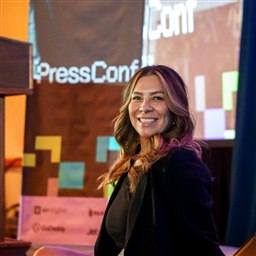
Raquel Manriquez
Founder, Wonderland Curious
Paid media
Organic got tons harder, and paid search honestly isn’t that much easier, but it still works.
I always remind folks that you pay for everything in a mixture of time and money. You pay a lot more money for the things that will cost you a lot less time; and a lot more time in the things that cost you less money. The trick is getting so good at something that you can reduce both the time investment and the cost.
That’s the promise with paid advertising. Instead of spending weeks producing content that doesn’t drive organic search, pay for the traffic instead. But the intent of users who click on ads is often very different and their attention span far less. Learning to optimize a page for a specific search phrase that is of sufficient volume and matching that intent with your product takes time and a lot of iteration. But once you have a high-performing page, it can pay for itself and more over a long period of time.
In the WordPress space there are only two people I’ve ever encountered that do this really well. My own paid media specialist at GiveWP that I hired myself, and Colin Daniels at FooEvents.
Paid acquisition is a feedback loop, not a one-and-done. It requires clear goals and objectives, effective landing pages, properly implemented pixels and conversion tags, plus a team prepared to keep testing and iterating through your initial disappointments.

Colin Daniels
FooEvents
Who to follow in 2027
If you want to learn how to do things more effectively, here are people and products I believe are worth watching closely.
On WP Product Talk we had several guests from product companies that grew in 2026. Start with these two specials:

Why Products Grow, Part 1
Founders of growing WordPress products share what actually moved the needle.
Why Products Grow, Part 2
More growing product companies, more concrete distribution and positioning lessons.
Those episodes dig into the how. Outside the show, these are people and products I keep coming back to:

Aurelio & WP Umbrella
Growing fast, and Aurelio talks about the work in public. Worth following for maintenance-product playbooks.

Katie Keith / Barn2
Keeps sharing numbers and tactics even when the numbers aren’t pretty. Watch her turn the corner in 2027.


Mike McAlister & Patrick Posner
Ollie keeps defining where WordPress theming goes next. Simply Static is becoming the default path for static WordPress sites.

Kevin Geary / Etch
Worth watching despite the social media bravado. Making Etch CMS-agnostic is worth watching and seeing how it might apply to your product as well.
 KramaKit
Michael / KramaKit
I’m biased, but he’s being open about tactics while maturing a new brand. Watch how KramaKit evolves in 2027.

Robert Abela / Melapress
Deep roots in WordPress security, and the brand has been evolving steadily. He’s got new moves coming.
Aaron / DocsBot
They stayed ahead of the “anyone can vibe-code this” threat. Watch them in 2027 and beyond for how they continually create a moat around their product and differentiate.

Spacefast
Automattic’s newest surface: a bit like Vercel, a bit like Cloudflare Pages, backed by WP Cloud with a headless WordPress under every Space. Watch their docs for “Sell.”
Success by a Thousand Cuts
Wrapping up: one of my biggest mantras at GiveWP and StellarWP was “Success by a thousand cuts.” We didn’t win by narrowly focusing on one channel. We won by meticulously monitoring and improving all the channels continually. It took hard work and dedication. That phrase has rung true through all my sessions with clients this year. So often, the lowest hanging fruit is just simply saying no to more dev time, and investing instead in a new marketing channel.
If you’ve learned from these ideas, you want to implement them for your plugin business in 2027, click the Book button below and we’ll have a free discovery call for how I can help.